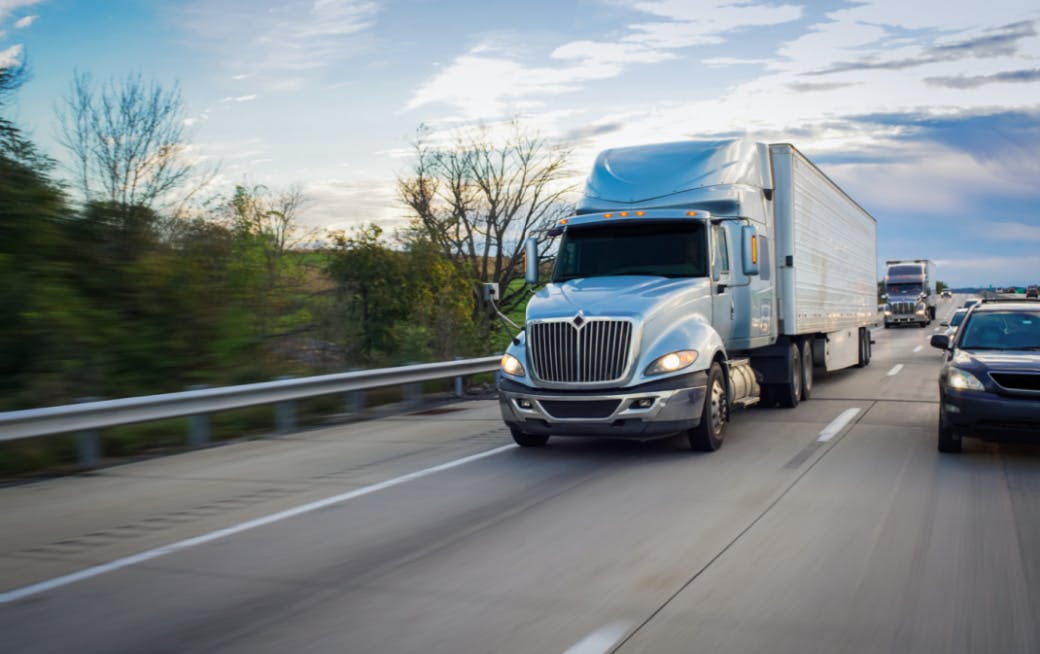
Supreme Court Expands Rights for Truck Accident Victims
Under a new Supreme Court ruling, truck accident victims can include freight brokers in their personal injury lawsuits. This will help hold more parties accountable for negligence and may give victims additional compensation for their injuries. Here's what the ruling means in plain terms.
Key Takeaways
- Under a new Supreme Court ruling, truck accident victims can sue freight brokers for negligent hiring under state tort law.
- Before this ruling, brokers could use federal law to have these claims dismissed before they reached trial.
- The new rule will allow injured persons to seek additional compensation after accidents involving a freight broker.
What the Supreme Court Ruling Says
On May 14, 2026, the U.S. Supreme Court issued a unanimous 9-0 decision in Montgomery v. Caribe Transport II, LLC. The case began in 2017, when Shawn Montgomery's vehicle was parked on the shoulder of an Illinois highway and was struck by a commercial truck. As a result of the accident, Montgomery lost part of his leg. Montgomery filed a lawsuit that named all parties involved:
- The driver who was operating the truck
- Caribe Transport II, LLC, the carrier that owned the truck and employed the driver
- C.H. Robinson, the freight broker that arranged the shipment
Caribe Transport II already had a poor safety record that was publicly visible in federal databases at the time. Based on this, Montgomery argued that the freight broker, C.H. Robinson, was negligent when they hired Caribe Transport II for the shipment.
C.H. Robinson argued that federal law protects brokers from state-level personal injury lawsuits. Specifically, they pointed to the Federal Aviation Administration Authorization Act (FAAAA), which limits states from regulating the prices, routes, and services of motor carriers and brokers. A district court dismissed the claim against C.H. Robinson, and the Seventh Circuit upheld that dismissal.
Now, the Supreme Court has reversed that ruling. Writing for the unanimous decision, Justice Amy Coney Barrett held that negligent hiring claims against brokers fall within FAAAA’s safety exception, which preserves state authority to regulate motor vehicle safety. Because C.H. Robinson’s decision to hire an unsafe carrier concerned the trucks that would be on the road, the broker can be held liable for negligence.
The ruling resolved a split among federal appeals courts and settled the question nationwide: freight brokers can be sued in state court when they negligently select an unsafe carrier.
What This Means for Minnesota Drivers
Before this ruling, injured drivers could only seek restitution from a truck driver and carrier after a truck accident. Freight brokers operating in Minnesota and elsewhere were considered exempt from negligent hiring claims under federal law. Even when a broker had ignored obvious red flags in a carrier's safety record, any claim against them would be dismissed before a case could move forward. This is precisely what happened when Shawn Montgomery named C.H. Robinson in his lawsuit.
The new Supreme Court ruling has changed that precedent. Now, truck accident victims can pursue negligent hiring claims against freight brokers under state tort law.
What Is a Freight Broker?
Freight brokers connect businesses that need to transport goods with carriers that have trucks available. They operate behind the scenes of the trucking industry, acting as intermediaries for shipments. When a manufacturer in the Twin Cities needs a load hauled to Chicago, they don’t always call a trucking company directly. Instead, they often hire a freight broker to handle the logistics: finding a carrier, negotiating rates, and coordinating the shipment.
Unlike carriers, freight brokers don't own trucks and don't employ drivers. Their job is to select the carrier that moves the load. That distinction is exactly what brokers have used for decades to argue they couldn't be held accountable when crashes happened. The driver caused the accident, and the trucking company hired the driver. The broker just arranged the deal. Now, that defense has been revoked.
When Does a Broker Actually Face Liability in Minnesota?
Minnesota sees substantial crashes from commercial truck traffic. In 2022 alone, the state recorded more than 4,700 truck accidents resulting in nearly 1,300 injuries and 65 deaths. With brokers now involved in roughly one in five commercial shipments, a significant share of those crashes involve a broker-arranged load. For injured drivers in those cases, the ruling opens a line of accountability that was previously blocked.
Broker liability applies most clearly when the carrier had documented safety problems that were visible in federal records before the load was booked. The Federal Motor Carrier Safety Administration (FMCSA) maintains a public database that records crash histories, inspection results, and safety violations for every carrier operating in the U.S. In the Montgomery case, Caribe Transport II had a conditional safety rating from the FMCSA, meaning the agency had identified problems in the carrier's safety compliance. C.H. Robinson hired them anyway.
Beyond the carrier's safety record, courts will also look at the broker's vetting process. Brokers who can show a thorough, documented carrier selection process are in a stronger position to defend themselves. Those who skipped vetting, relied on automated systems without review, or prioritized price over safety history face greater risk of liability.
The new ruling doesn't make brokers automatically responsible for a crash, even if they hired the carrier involved. It simply gives victims the right to bring a claim.
Why This Matters for a Truck Accident Claim
The practical impact of this ruling goes beyond holding freight brokers accountable. The trucking industry is made up of hundreds of thousands of small commercial carriers, many running fewer than 10 trucks. These carriers often carry only the minimum insurance required by federal law. In a catastrophic injury case involving extensive medical treatment, long-term care, or lost earning capacity, those policy limits can fall well short of what the victim actually needs.
When a freight broker is also liable, injured parties have more options. Brokers carry their own liability insurance, and in cases involving severe injuries, that additional source of compensation can be significant.
What to Do After a Truck Accident in Minnesota

After a Minnesota truck accident involving a freight broker, time is of the essence. Evidence can disappear quickly, such as:
- Broker-carrier agreements
- Internal vetting records
- FMCSA safety data as it existed at the time of hire
Federal regulations only require carriers to retain certain records for limited periods, and brokers are under no obligation to preserve documentation indefinitely. Acting quickly after a truck accident gives an attorney the best chance to track down that evidence before it's gone. In cases where the carrier's insurance falls short, that investigation will make a significant difference in how much compensation you can recover.