6 Safe Driving Tips for Minnesota Deer Season
Every fall, Minnesota sees a sharp increase in deer-vehicle collisions. Here’s the big picture and tips on how to avoid a wildlife encounter of the wrong kind!
When (and Where) Are Deer Strikes Most Common?
Fall
From October to December, the deer breeding season is in full swing. During that time, deer are more active and less cautious than at any other time of year. Individual deer and herds alike roam freely, often crossing roads they would have avoided at other times of year. That makes fall the most common time for collisions with drivers.
Spring
Spring sees another spike in deer crossings, though less than in the fall. As the snow recedes and new grass starts growing along the roads, many deer venture closer, drawn to an easy food source. This can be especially dangerous, as many drivers are not as alert as they may be in the fall.
Dawn and Dusk Hours
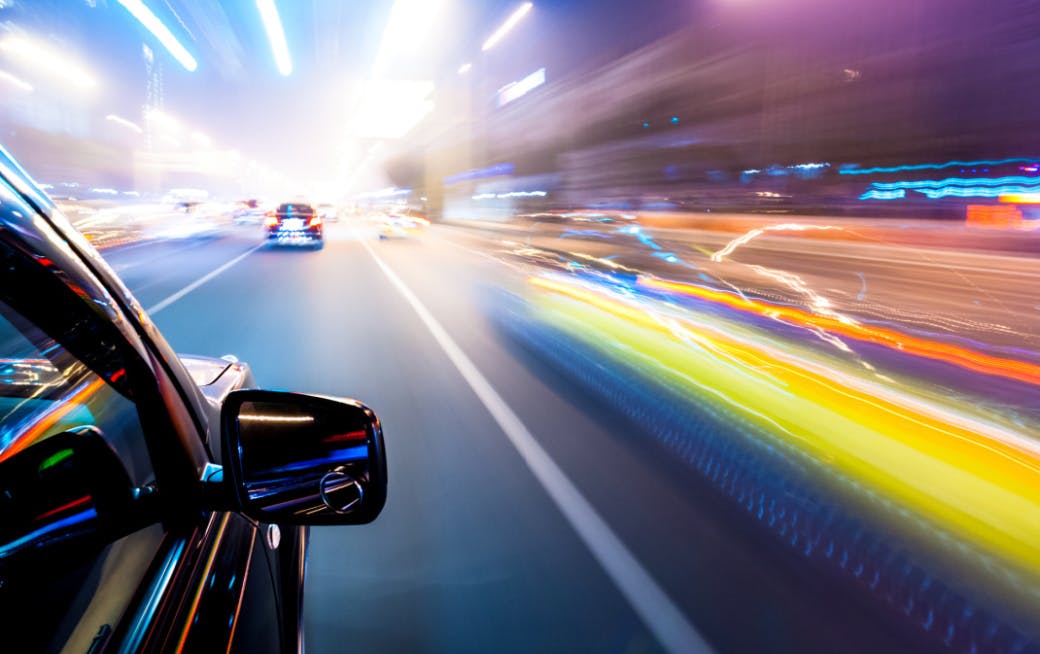
Deer are most active at dawn and dusk, making these the highest-risk hours. Reduced visibility also increases the likelihood of an accident during those times. Low light and sunglare can both make it harder for drivers to see deer moving near a road.
Rural Highways
Roads that cut through woodland or open fields see the highest concentration of deer-vehicle crashes. These are the corridors deer use daily to move between cover and feeding areas, which makes the road itself part of their normal route. Rural highways can also have bends and obstacles that block visibility, and no medians or barriers to stop deer from jumping in your path.
Tips for Avoiding a Collision
1. Slow Down at Dawn and Dusk
Dawn and dusk are the two riskiest times for deer encounters, so it’s wise to be extra careful during those hours. According to the Minnesota Department of Public Safety, deer are most active between 6 pm and 9 p.m. 5 a.m. to 8 a.m. is another common window.
However, as a general rule, anytime between a couple of hours before and after sunrise or sunset can be dangerous. Go a little slower than usual if you’re driving during those times, especially in rural areas. Slowing down will give you more time to react if a deer appears suddenly.
2. Scan the Shoulders, Not Just the Road
Deer rarely announce themselves from the middle of the lane. Train your eyes to sweep the edges of your headlights, not just the pavement ahead, especially where trees or brush line the road. When driving in low light, watch for the reflection of deer eyes or deer silhouettes along the shoulder of the road. In many cases, that could be your first and only warning before the deer are on the move.
3. Watch for Deer Crossing Signs
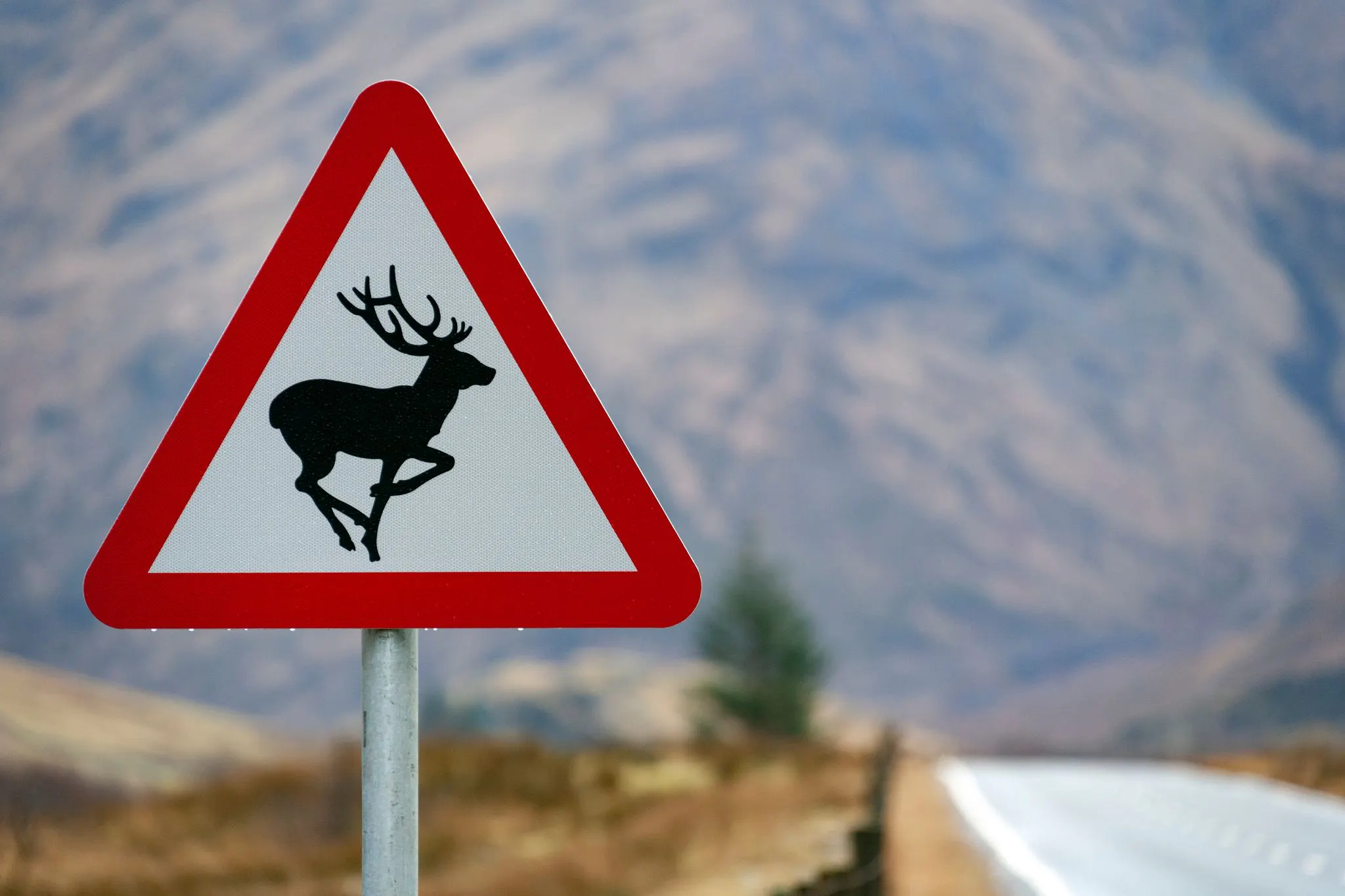
Deer crossing signs may be among the most ignored signs on any road. That can be a mistake. These signs go up where there is a history of crashes or known deer crossing patterns. They mark real, recurring risk to drivers in the area. Slowing down when you see these signs only costs a few extra seconds and could save you far more.
4. Use High Beams
High beams can greatly improve visibility in low light conditions. The extra light can not only shine farther, but also illuminate more of the sides of the road and catch the reflection of deer eyes. That extra warning could be the reason you have time to slow down before a deer leaps into your path. However, high beams should never be used:
- Within 1,000 feet of an oncoming vehicle
- When following within 200 feet of another vehicle
- In fog, rain, or snow (high beams reflect off moisture and create glare)
5. Don't Rely on Deer Whistles
Deer whistles and similar gadgets have become a popular safety feature for drivers in recent years. However, the data does not currently support the notion that deer whistles reduce collisions. According to one study, deer whistles are unlikely to be loud enough for deer to hear at sufficient distance, and another found that whistles produce sounds at a frequency deer can’t easily hear. While we cannot say for certain whether deer whistles are effective, it is better to slow down and rely on your own eyes than to trust in whistles to keep deer away.
6. Expect the Unexpected
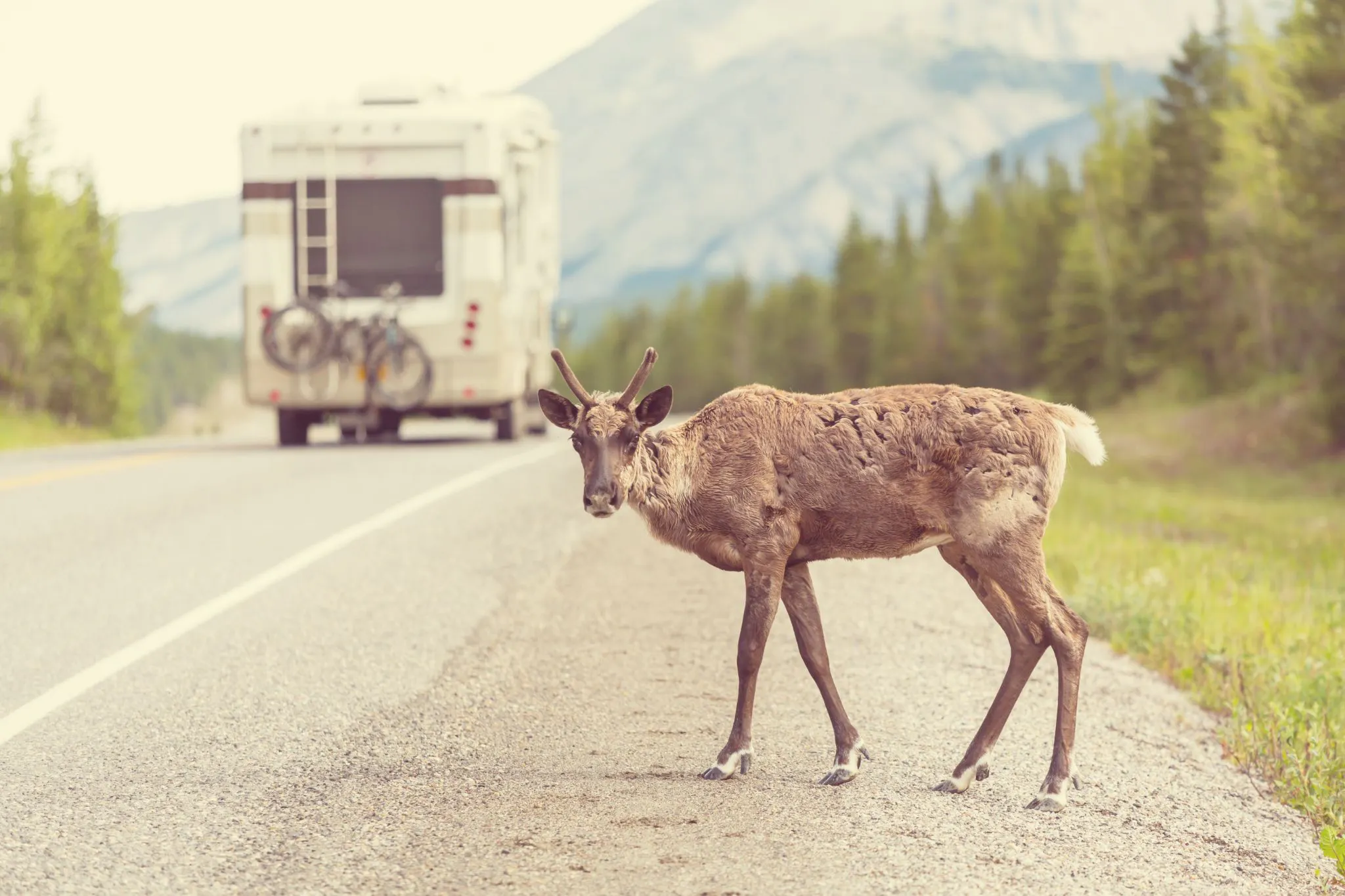
Part of the reason deer can be such a risk for drivers is their unpredictability. Deer often don’t move in a straight line or behave reliably once they enter a road. They may stop mid-crossing, double back, or even move toward an approaching vehicle. Deer often move in groups, too, so even if one has left the road, another may be close by. Slow down and stay alert until you're well past the area.
What to Do If a Collision Is Unavoidable
- First, resist the urge to swerve. Swerving to avoid a deer can cause you to lose control of your vehicle, collide with another vehicle, or cause a rollover accident. Even if it’s tempting, never veer for deer.
- Brake firmly and stay in your lane. Keep both hands on the wheel and your eyes forward, because bracing for impact starts with keeping the car pointed straight ahead. Striking a deer is never ideal, but doing so while under control is almost always safer than losing control of your vehicle trying to avoid it.
- If the deer clears your path in time, don't relax right away. Instead, ease off the accelerator and keep scanning the road, since deer often travel in groups and a second animal may follow close behind the first.
- If you do collide with the deer, pull over to a safe spot if possible and turn on your hazard lights so other drivers can see you.
- Check yourself and any passengers for injuries before getting out of the vehicle. If anyone is hurt, call 911 right away.
- Keep your distance from the deer even if it appears to be dead, unconscious, or gone. An injured animal can still be unpredictable and dangerous. Let law enforcement or a conservation officer handle it.
- Take photos of the vehicle damage, the road, and the surrounding area. This documentation can help if you file an insurance claim later.
- Notify your insurance provider. Most policies set a window for reporting a claim, and delaying can complicate the process. However, keep your report simple and to the point. Insurance companies may twist your words or take them out of context to try to minimize your claim.
Staying calm and following these steps gives you the best chance at protecting yourself, your passengers, and your claim.
A Little Caution Goes a Long Way
Fall in Minnesota means longer shadows, earlier dusks, and more deer stepping out from the tree line than any other time of year. Most of what keeps you safe during deer season comes down to habit rather than luck. Slowing down, keeping your eyes peeled, and exercising a little extra caution can go a long way to avoiding an accident.
However, even careful drivers sometimes end up in unavoidable collisions. If you’ve been injured in an accident, you deserve fair compensation, and SiebenCarey is here to help. Schedule a free consultation with our team, and we’ll be happy to answer all your questions.